How to Improve Navigation for Improved UX and SEO
Optimizing website navigation is one of the most effective approaches to strengthen the user experience, enhance search engine optimization, and increase conversions. For businesses using web design, seo services, digital marketing, and support from ai experts, navigation is not just a layout detail. It determines how site visitors move through the buyer journey, how search engines interpret your site structure, and whether people can find what they need without friction.
For Rochester, NY businesses, this matters even more. Customers searching from downtown Rochester, the Greater Rochester area, or nearby suburbs such as Brighton, Greece, and Irondequoit often want instant answers on mobile devices. If your navigation is not easy to use, not scannable, or not aligned with local search intent, users will bounce before they ever reach your service pages. The right structure can cut down bounce rate, increase engagement, and help people browse quickly through a simple menu that feels logical.
What drives website navigation effective?
Strong navigation relies on user experience and a https://fulton-ny-hx396.nexorafield.com/posts/web-design-seo-services-digital-marketing-and-ai-experts-in-rochester-ny clear understanding of your site structure. A website is more user-friendly when visitors can find what they need in a few clicks, without guessing where pages live. That means developing a logical layout that matches real user behavior, not just internal company departments.
Effective navigation usually includes clear menus, a visible navigation bar, and internal linking that helps visitors move between related pages. When menu items are labeled clearly and arranged in a way that reflects your information architecture, site visitors can understand the site hierarchy fast. They do not need to think hard about where to go next, which helps reduce friction and supports a smoother user journey.
For example, a Rochester contractor, law firm, or clinic should make it easy for visitors to find service pages, about pages, contact details, and location pages without hunting through cluttered sections. A good navigation system helps users find what you need, not just what the business wants to say. That is why effective navigation improves both UX and search engine optimization.
Internal linking also matters because it connects related content in a way that supports browse behavior and content discovery. If a visitor lands on one page and sees clear links to nearby topics, the site feels more helpful and easier to use. This can improve engagement and encourage deeper sessions.
How should a navigation menu be organized?
The strongest navigation menus are built from site structure, not hunches. In other words arranging pages based on the way users think about your offerings. Your primary navigation should contain the highest-priority pages only, while secondary navigation can include less critical but still useful content such as FAQs, policy pages, or industry resources.
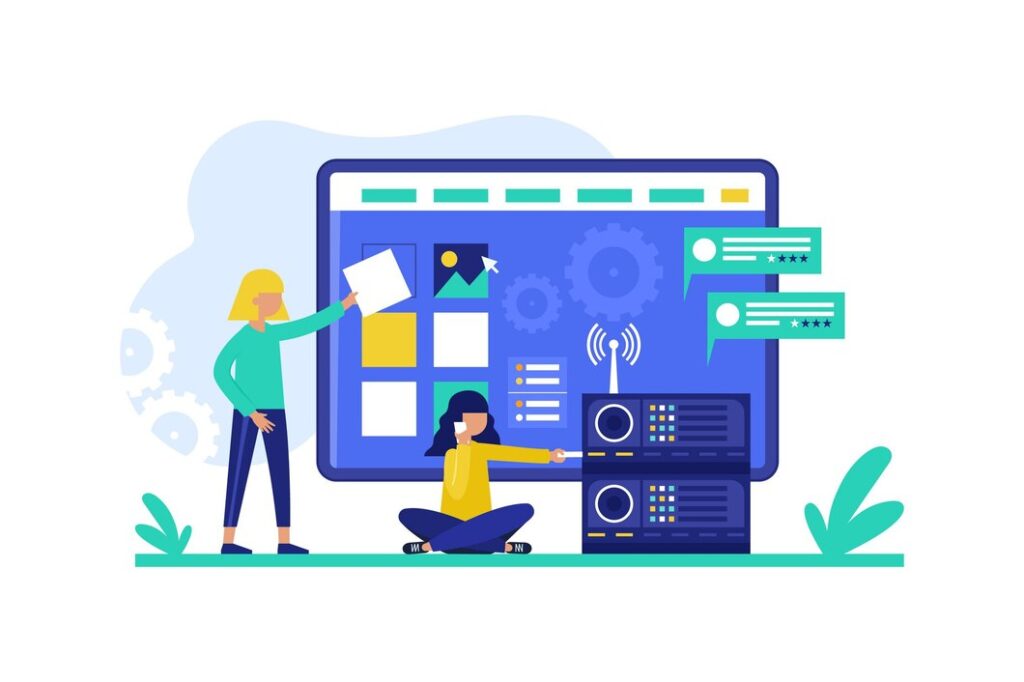
A well-planned primary navigation usually includes a few essential categories such as Services, About, Locations, Blog, and Contact. If your business has multiple service lines, group them in a way that is simple to read. Overly many top-level choices can overwhelm visitors and reduce attention. A simple menu is often more effective because it is easier to navigate on desktop and mobile.
Dropdown menus can be effective when they are used carefully. They help organize deeper sections without crowding the main navigation bar, but they should never be so large that users get lost. Each dropdown should reflect a clean site hierarchy and should lead to pages that support a specific customer path. If your business serves Rochester, NY and nearby communities, dropdowns can be helpful for grouping location pages, service-area pages, or specialized services under one clear category.
Mobile navigation deserves special attention because mobile usability often determines whether a customer stays or leaves. On smartphones, users want a menu that opens quickly, shows distinct menu labels, and makes it simple to tap through without zooming. Adaptive design and responsive web design should make the navigation work naturally across screen sizes. If your menu is hard to tap, too dense, or hidden behind confusing icons, the experience suffers immediately.
Breadcrumb navigation is also helpful on deeper pages. It gives users a clear trail back through the site hierarchy and helps them understand where they are. This is especially useful for websites with many service pages or local landing pages.
What are the best ways to enhance SEO through site navigation?
Menu structure has a direct effect on crawlability and page inclusion. Search engines use internal links to locate pages and interpret how content ties together across a website. If your navigation is clearly arranged, search engines can access important pages more effectively and understand their role within the broader site hierarchy.
Among the most important SEO methods is choosing anchor text that is specific and relevant to the page. Instead of vague labels like “Learn More” or “Click Here,” choose phrases that show keyword relevance and the specific page topic. As an example, “Roof Repair Services,” “Pediatric Dentist in Rochester,” or “Downtown Rochester Location” informs both users and search engines what to expect. Effective anchor text boosts search engine optimization by improving topic clarity.
Sunstone Digital Tech50 Fountain Plz #1400, Buffalo, NY 14202
(315) 758-3349
https://maps.app.goo.gl/y9HMhvcoPCh9V3eKA
https://sunstonedigitaltech.com/buffalo-marketing-agency/web-design
42.8898193, -78.8738661
Internal linking should also be deliberate. Link service pages to related blog posts, location pages to appropriate service content, and connected pages to one another in a organic way. This helps spread authority, improves crawlability, and reinforces the visibility of important pages. A careful internal linking strategy can also assist search engines recognize which pages should deserve to rank for specific terms.
Search term relevance matters as well, but it should never feel unnatural. Your navigation labels, page headings, and anchor section names should reflect how people actually search. For Rochester businesses competing in local SEO, this might mean using terms that align with nearby service intent, neighborhood queries, and regional service areas. If your audience is searching for “plumber in Brighton” or “digital marketing in Monroe County,” your site hierarchy should back up those searches naturally.
Site navigation also affects the extent to which your content is discovered and indexed. If essential web pages are placed too far below or only available through weak link structure, search engines may crawl them less effectively. Putting first important pages in the top navigation helps make those pages more visible. That can be especially crucial for businesses using SEO services to enhance visibility in highly competitive local markets.
How does web design boost navigation understanding?
Effective web design helps make navigation seem obvious. Visual hierarchy shows users where to look first, what counts most, and how to move through the site. Headings, spacing, contrast, and button design all shape whether navigation feels clear or confusing.
A strong visual hierarchy starts with a clean navigation bar, readable menu labels, and clear calls to action. Primary actions such as “Contact Us,” “Request a Quote,” or “Book a Consultation” should stand out without overpowering the page. Call-to-action buttons should look intentional and be placed where users naturally expect them. This makes it easier to guide the customer path and supports conversion rate optimization.
Consistent layout is another key factor. If the menu moves from page to page, or if key elements appear in different places on different screens, users may feel lost. A consistent layout creates recognition, and familiarity helps site visitors browse efficiently. It also reinforces trust, especially for service businesses where users want a smooth, professional experience.
Adaptive design is essential because people increasingly visit websites on mobile devices. Responsive web design ensures the same content and structure adapt to different screen sizes without becoming crowded or hard to use. This is important for mobile-friendly design and mobile usability, especially for Rochester businesses that compete on smartphone searches while users are moving around.
Smart web design also supports scannable content. Navigation should not compete with the page itself. Instead, it should guide users toward important areas of the site in a way that feels simple to use. When the structure is clean and logical, users can find what they need with less effort and more certainty.
What menu errors damage conversions?
Some of the most common navigation mistakes cause confusion and decrease conversions. A significant concern is including too many menu items. When the main menu becomes overloaded, users have to consider too many choices at once, which delays decision-making and can increase bounce rate. A crowded navigation bar often signals a failure to prioritize.
Faulty links are another major problem. If users click a menu item or internal link and land on an error page, trust drops immediately. Broken links interrupt the customer path and make the site feel neglected. They can also interfere with crawlability and indexation, which creates SEO problems as well.
Unclear labels are equally damaging. Menu labels should be easy to understand, specific, and aligned with user intent. Vague terms may sound clever internally, but they often fail in practice because site visitors cannot tell what they mean. Good menu labels help people find what they need fast and support a easier, more effective customer journey.
Hidden content is another common issue. If important pages are buried behind expandable elements, hard-to-find dropdowns, or poorly designed mobile menus, users may never reach them. This can hurt conversion rate optimization because users drop off before they see your offer, form, or call-to-action buttons. It also weakens internal linking and reduces the visibility of important pages.
For businesses in Rochester, NY, these mistakes can be costly because local competition is strong. Whether you are serving downtown Rochester, Brighton, Greece, Irondequoit, or other parts of the Greater Rochester area, users expect clear navigation and quick access to service information. If your site does not make it easy to browse quickly, prospects may move on to a competitor.
How can data and AI experts assist in optimizing menu navigation?
These experts can deliver navigation improvements considerably more exact. Instead of guessing where users struggle, you can use click maps and interaction flow data to see how people actually interact with your site. Heat maps show where users click, how far they scroll, and which sections get ignored. User flow reveals the paths users follow before converting or leaving.
This data helps identify where the navigation breaks down. Maybe people are clicking the wrong menu labels, missing key service pages, or dropping off before reaching contact forms. When you review user flow, you can see whether the site supports a smooth user journey or creates unnecessary friction. That information is useful for conversion rate optimization and site design improvements alike.
AI-powered insights can also help by spotting patterns across large sets of user sessions. Machine learning experts can analyze navigation behavior faster and uncover issues that are easy to miss manually. For example, AI might show that mobile users frequently exit on a certain page, or that visitors consistently ignore a menu section that should be more prominent. Those insights can guide changes to page structure, internal linking, or call-to-action buttons.
When you combine analytics with AI, you can make smarter decisions about what to keep, what to simplify, and what to test. This is especially valuable for growth teams that want navigation to support leads, calls, form fills, and other conversions. Rather than seeing navigation as a single task, you can treat it as an ongoing optimization process.
What do Rochester, NY businesses take into account locally?
Rochester, NY is a busy local market with providers serving downtown Rochester, the Greater Rochester area, and nearby suburbs such as Brighton, Greece, and Irondequoit. This means navigation should be designed around area-specific search behavior, not just broad national assumptions. A lot of users are looking for nearby services, fast answers, and place-specific details that help them choose a provider quickly.
Regional search demand is very important in Monroe County and the Finger Lakes region. People often look with geo signals, service keywords, and urgency. A searcher might want same-day repair service in Rochester, a local consultant in Brighton, or a regional service provider that serves multiple counties. Your menu structure should make those options easy to access.
One smart approach is to build a navigation structure that accommodates both service pages and location pages. For instance, a business may have a primary Services section, plus specific pages for Rochester, Brighton, Greece, and Irondequoit. This helps local SEO by matching local and regional searches while still making the site simple to navigate. If you work in multiple areas, well-organized location pages can improve relevance without overloading the main menu.
Rochester businesses should also account for mobile search. Many people discover local companies while commuting, running errands, or comparing providers from their phones. That renders mobile optimized design important. Navigation must be straightforward to use on a small screen, with simple menu labels, fast access to contact information, and clear pathways to service pages or location details.
Nearby rivalry often boils down to clear communication. The brands that win are usually the ones that make it simple for visitors to find what they need, know where solutions are offered, and act without delay. Strong web design and seo services can reinforce that goal, but the menu structure has to do its part.

FAQ: Common questions about enhancing navigation
What is the ideal navigation structure for a small business website?
The ideal navigation structure for a small business website is usually straightforward, purposeful, and built around information architecture. Rely on primary navigation for the main pages, keep secondary navigation for supplementary content, and make sure each label is clear. A clean site hierarchy helps users locate what they need and supports SEO.
How numerous items should be on the top menu?
No fixed number, but a main menu should be concise. Many small business sites work best with a minimal menu that includes only the most important sections. Too many items can flood users, diminish clarity, and harm engagement. Keep the primary navigation compact so site visitors can browse easily.
Does website navigation affect SEO rankings?
Absolutely. Website navigation affects crawlability, indexation, internal linking, and how search engines interpret keyword relevance and site hierarchy. Clear navigation helps search engines find pages more efficiently and makes it easier for users to reach important content. That combination supports search engine optimization and can improve performance over time.
How do I improve navigation on mobile devices?
Improve mobile navigation by using mobile optimized design, responsive web design, and clear menu labels. Make sure the menu opens without difficulty, buttons are large enough to tap, and important pages are accessible without added effort. Mobile usability is especially important for users searching on smartphones, including local customers looking for nearby services.
Can AI experts help identify website navigation problems?
Absolutely. AI experts can analyze heatmaps, behavior flow, and other analytics data to find navigation issues that may not be obvious in a manual review. They can identify where users drop off, which menu items get ignored, and where conversion rate optimization opportunities exist. That insight can help optimize web design, digital marketing, and SEO services for better results.